The Azyro system is a development-stage device. It has not completed conformity assessment under Regulation (EU) 2017/745, does not carry a CE marking, and is not available for sale or for routine clinical use in any market. The ISO 13485 certificate issued by TÜV SÜD covers the quality management system of Azyro S.A., not the conformity or the performance of the device. All performance statements on this website are based on preclinical in vitro evidence.
Why diabetic foot ulcers stop healing
Diabetic foot ulcers are chronic, infection-prone wounds that resist standard treatment. Bacteria hide inside biofilms, deep in tissue pockets where topical antiseptics cannot reach. Antimicrobial resistance makes the problem worse: standard antibiotic regimens grow progressively less effective against these protected colonies. The result is a non-healing wound, repeated debridement, and, in the worst cases, amputation.
The scale of the problem is growing. 589 million adults aged 20-79 live with diabetes worldwide, and that number is projected to rise by 45% by 2050 (IDF Diabetes Atlas). A diabetic foot ulcer device that reaches deeper than a topical dressing addresses a problem that current tools cannot solve.
* Source: IDF Diabetes Atlas
The Azyro device: magnetic-field therapy for chronic wounds
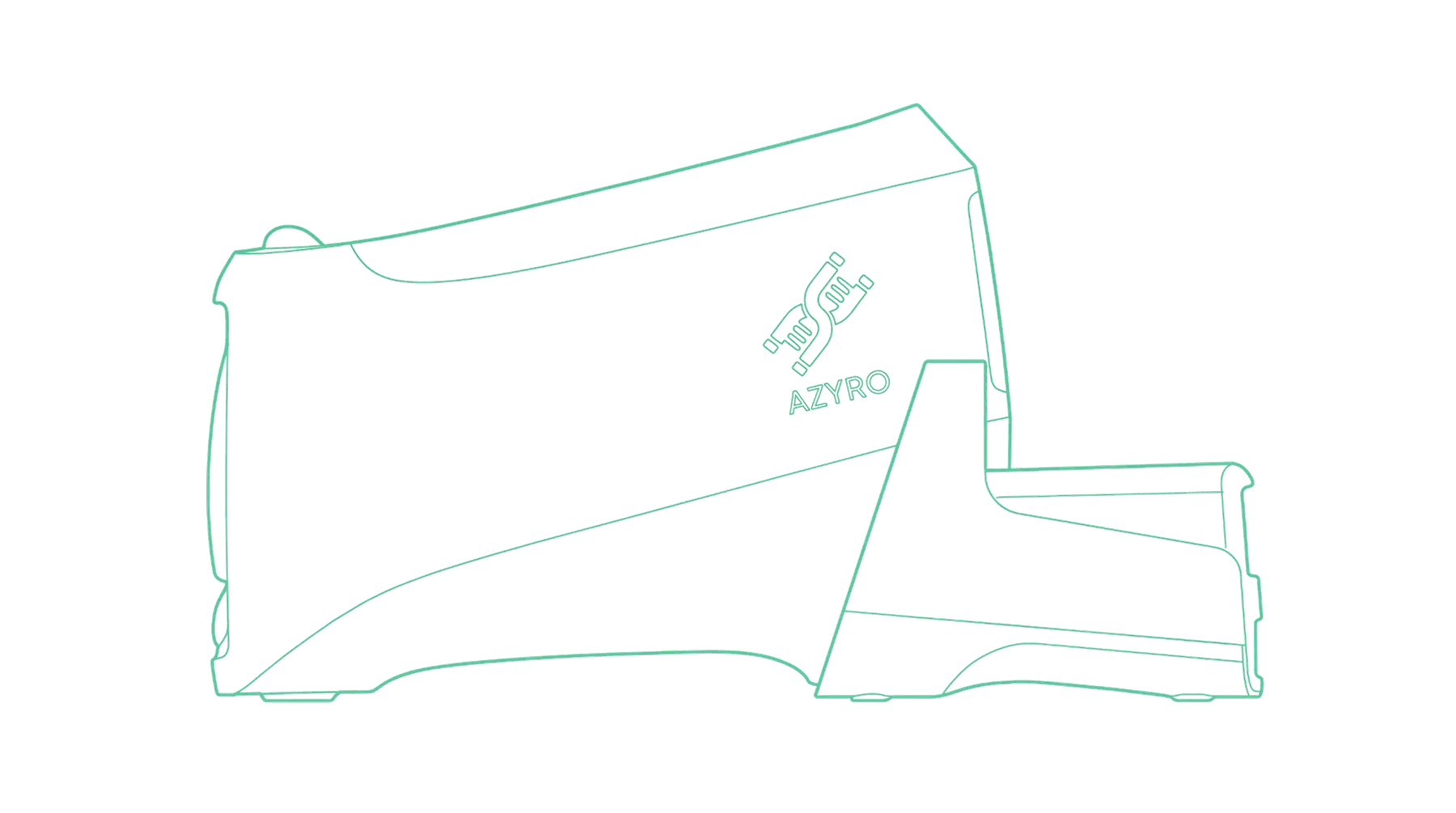
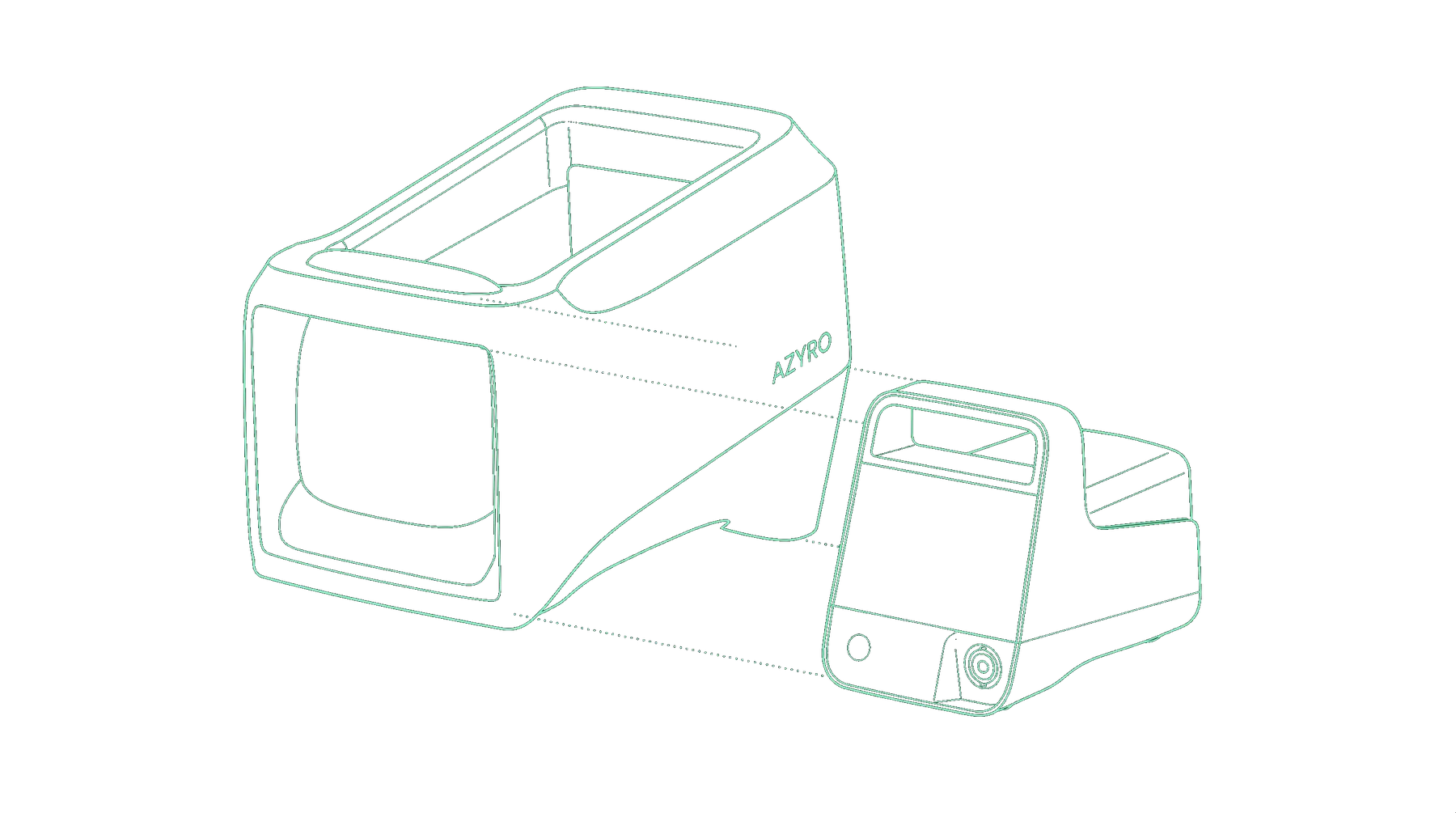
Azyro's diabetic foot ulcer treatment device pairs an application chamber with Aurono Generator, a portable controller. A precisely calibrated, low-intensity magnetic field passes through dressings and reaches bacteria hiding deep in the wound, where topical antiseptics never arrive. The field disrupts bacterial cell walls and biofilms, the defences that protect resistant strains, and restores the effectiveness of standard antiseptics and antibiotics.
The device does not replace antibiotics or antiseptics. It potentiates antiseptics even below the MIC (the device is at development stage).
Product film
How a treatment session works
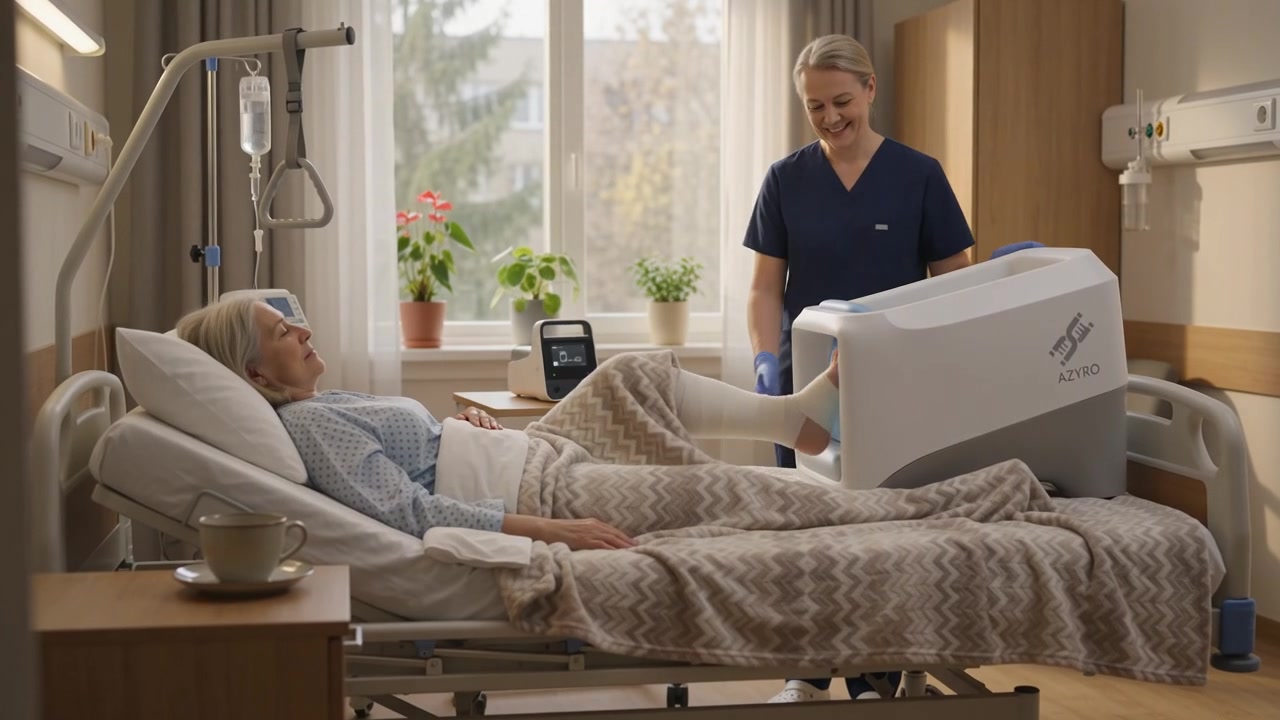
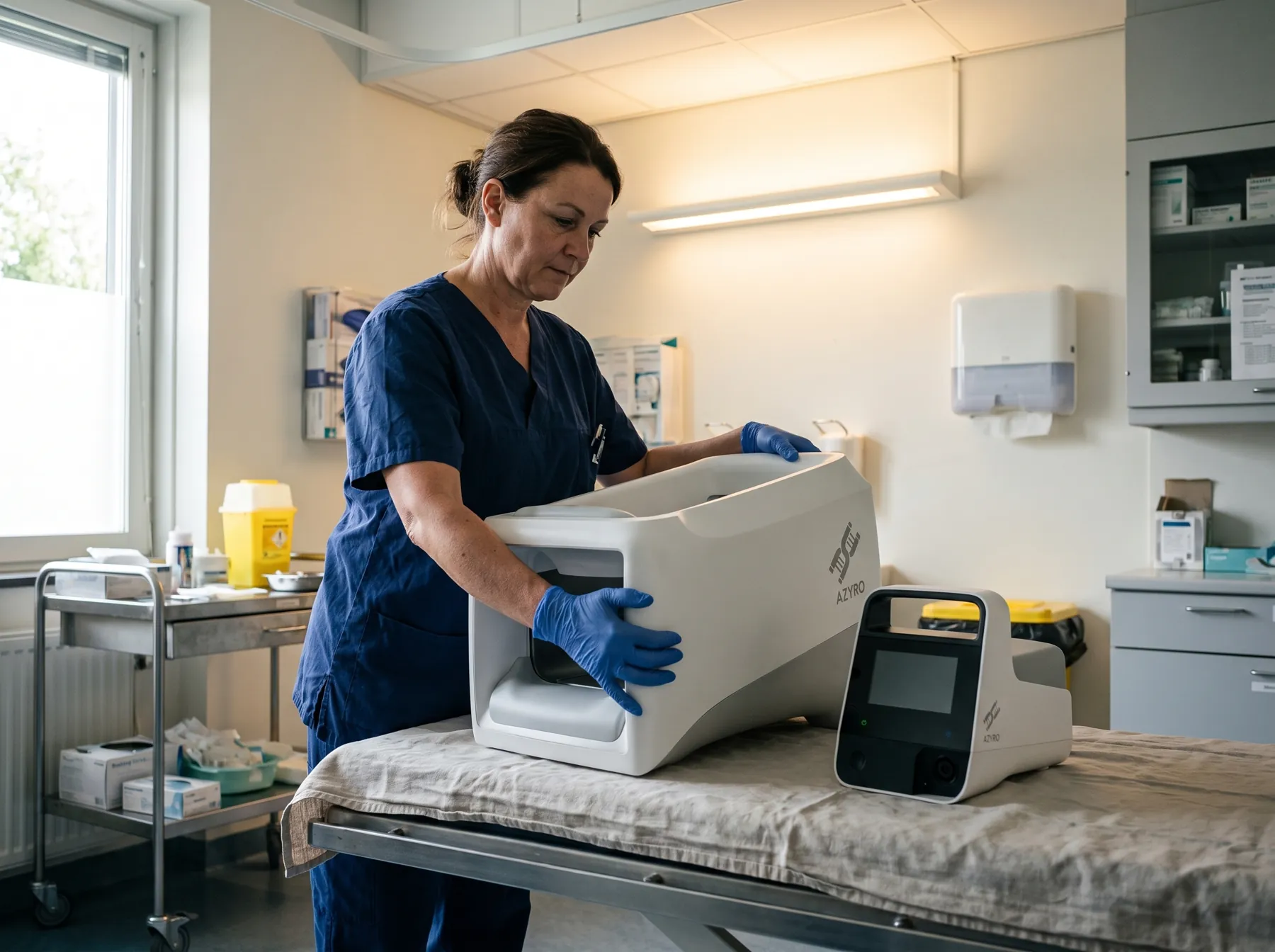
A single nurse positions the application chamber over the dressed wound in under a minute. There is no contact, no pain, and no need to remove the dressing between sessions. The chamber delivers the calibrated magnetic field for the protocol duration, then the patient returns to normal care. No new standard operating procedures are required: the device fits into existing wound-care workflows.
From hospital to home care
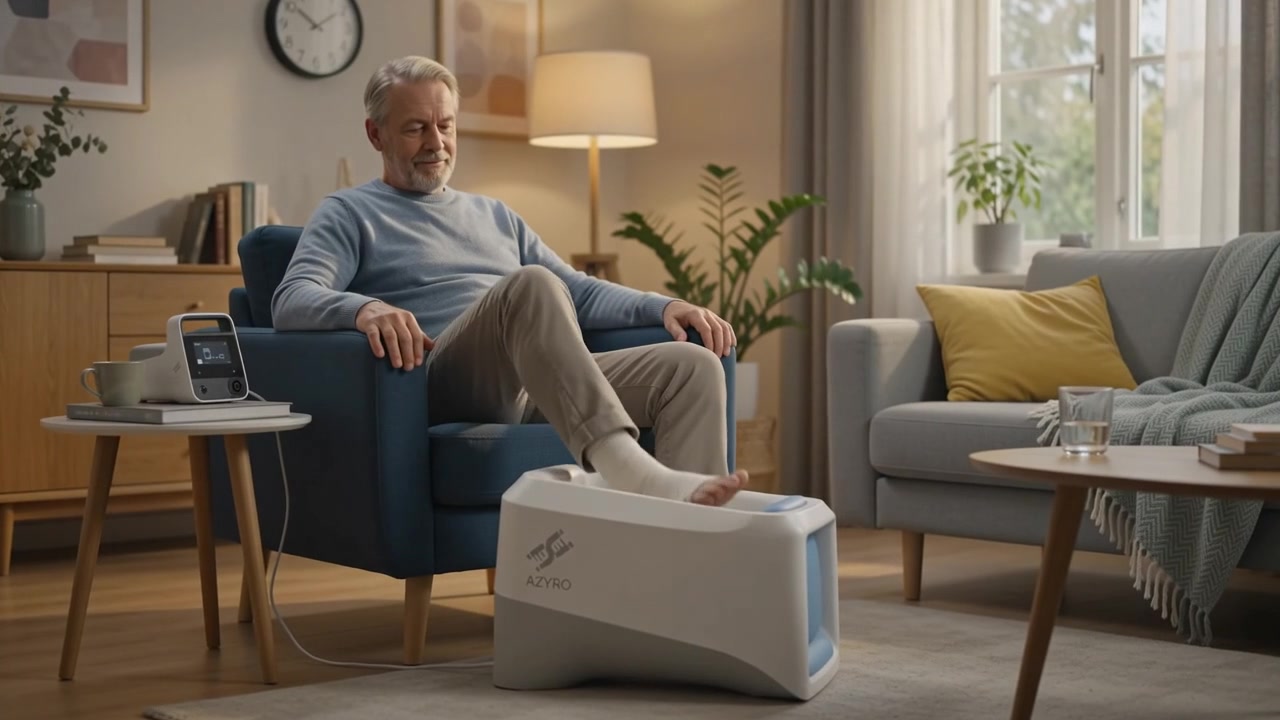
Azyro's diabetic foot ulcer device is modular and portable, built for the full continuum of care. In the hospital, it fits into acute-care protocols with minimal setup time. At home, patients or caregivers continue the same protocol with the same device, supporting compliance without repeated hospital visits. This hospital-to-home consistency matters for a chronic condition that requires sustained treatment over weeks, not a single procedure.
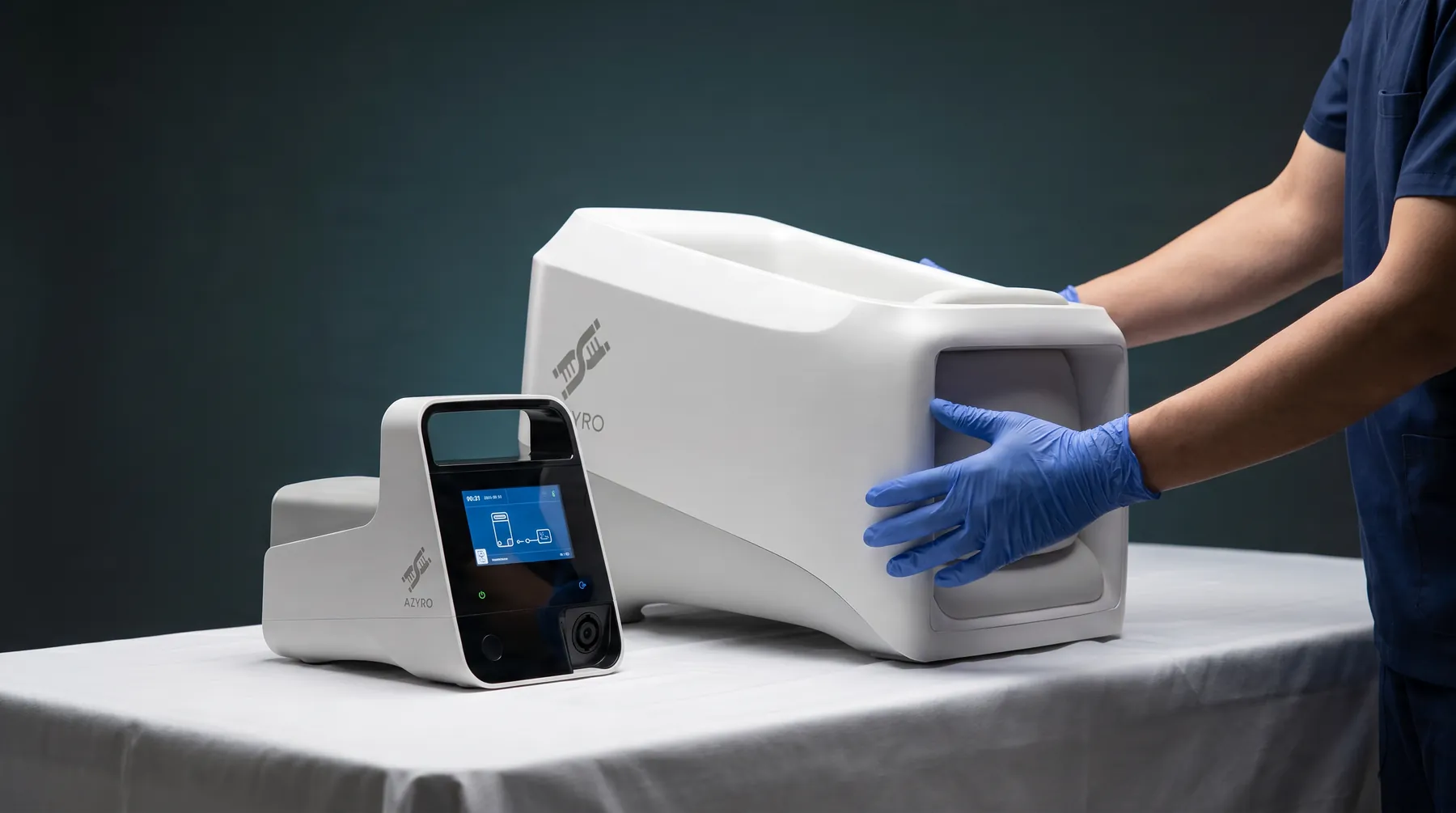
A session in under a minute
A single nurse sets up a session in under a minute.
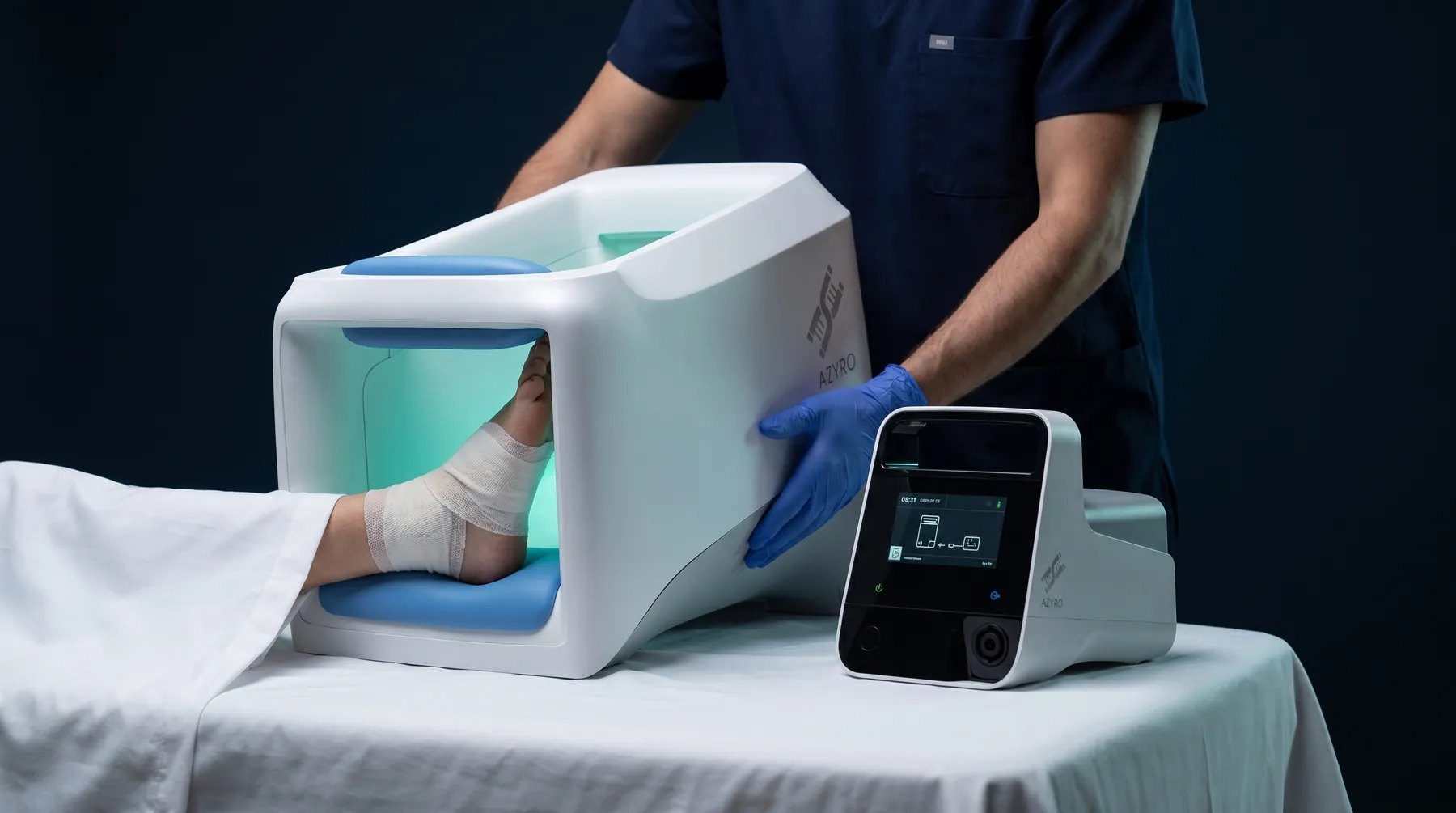
Through the dressing, no contact
Portable and plug-and-play. Patients continue the same protocol at home, supporting compliance for a chronic condition.
See Azyro in action
Filmed live on the floor at Nexus Luxembourg 2026, LuxExpo The Box.
Clinical benefits for wound-care teams
For clinicians managing diabetic foot ulcer caseloads, the device addresses three recurring pain points:
- Deep-tissue reach. The magnetic field reaches bacteria in pockets that antiseptic dressings cannot access.
- Antimicrobial resistance wound care. By potentiating existing antimicrobials, the device extends the usefulness of antibiotics already in the treatment plan, rather than requiring new drug regimens.
How it compares to other DFU devices
Most diabetic foot ulcer treatment devices on the market target debridement, offloading, or topical delivery. Azyro's technology:
- Targets the biofilm that keeps antimicrobials from working.
- Can be applied through the dressing and without contact.
- Can be used with the same device in hospital and in home care.
Evidence & certifications
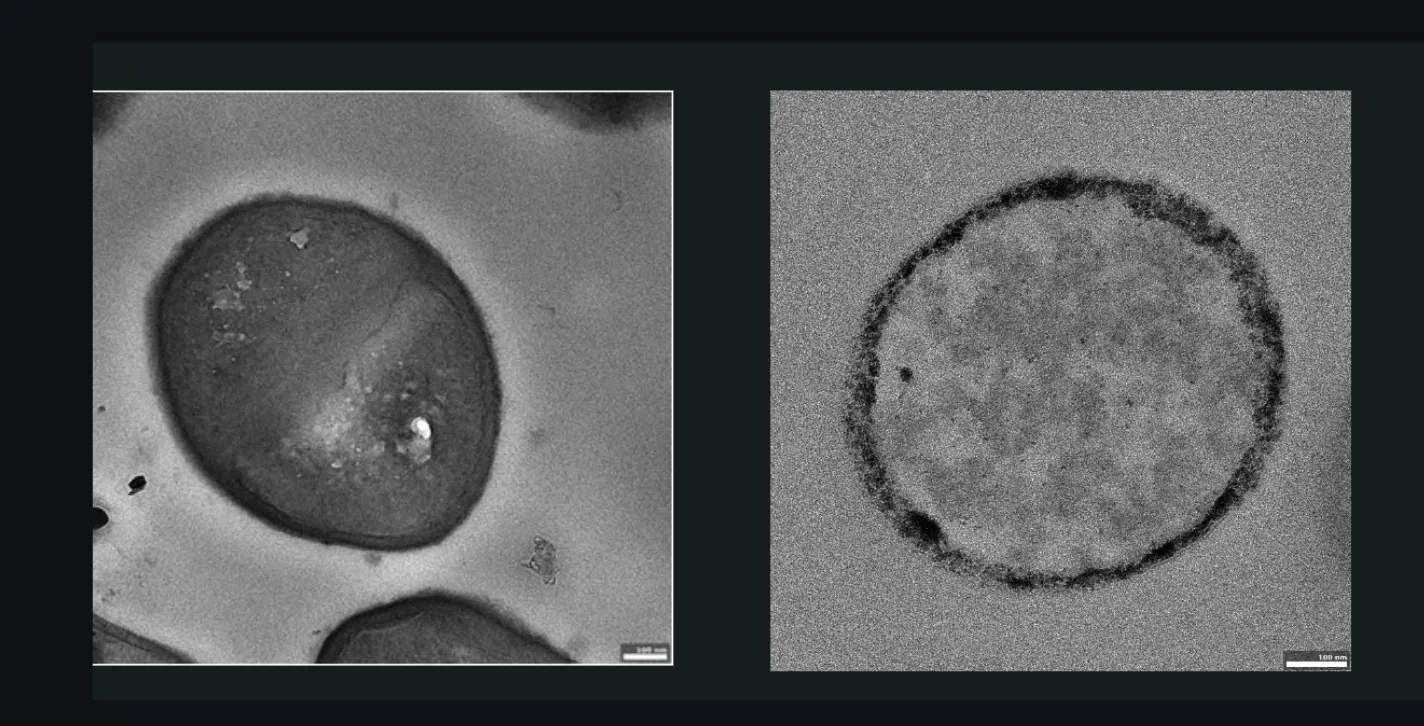
Azyro's mechanism is supported by preclinical evidence, including scanning electron microscopy (SEM) showing morphological disruption of the MRSA (S. aureus) cell wall after exposure to the Azyro magnetic field. Azyro S.A. operates a quality management system certified to ISO 13485 by TÜV SÜD, and the underlying technology is protected under EP2025/068630 and EP4400155. The Azyro system is a development-stage device. It has not completed conformity assessment under Regulation (EU) 2017/745, does not carry a CE marking, and is not available for sale or for routine clinical use in any market. The ISO 13485 certificate issued by TÜV SÜD covers the quality management system of Azyro S.A., not the conformity or the performance of the device. All performance statements on this website are based on preclinical in vitro evidence.
Works with your existing protocol
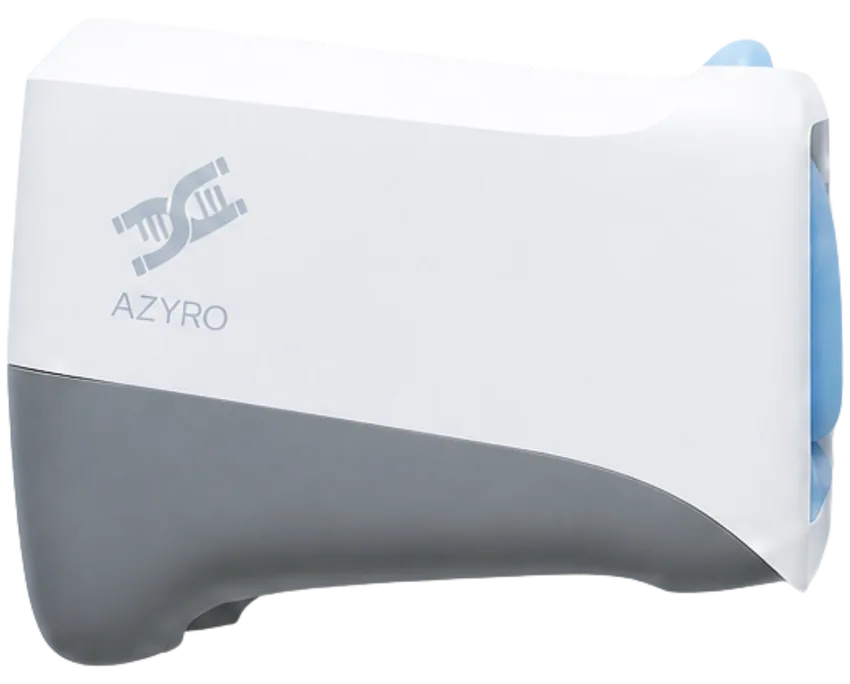
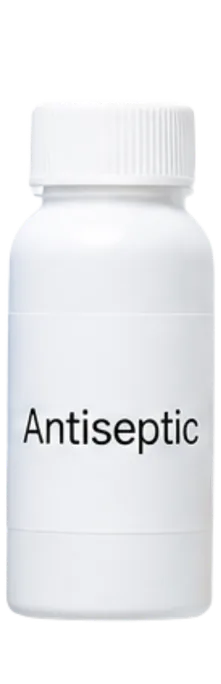
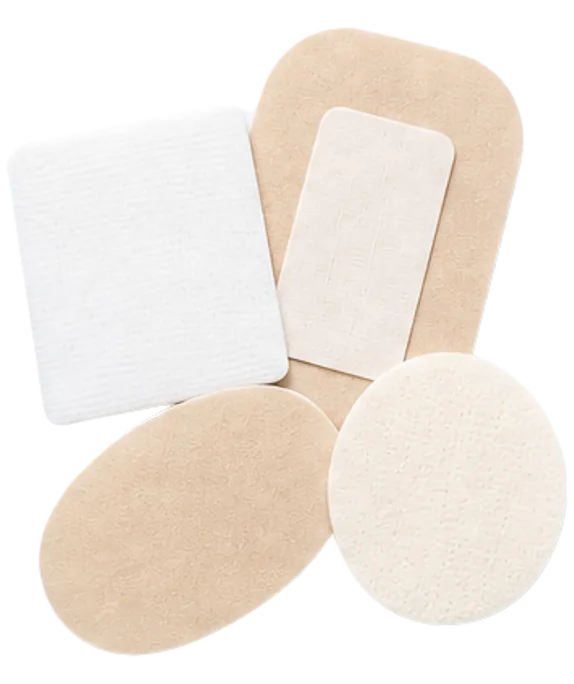
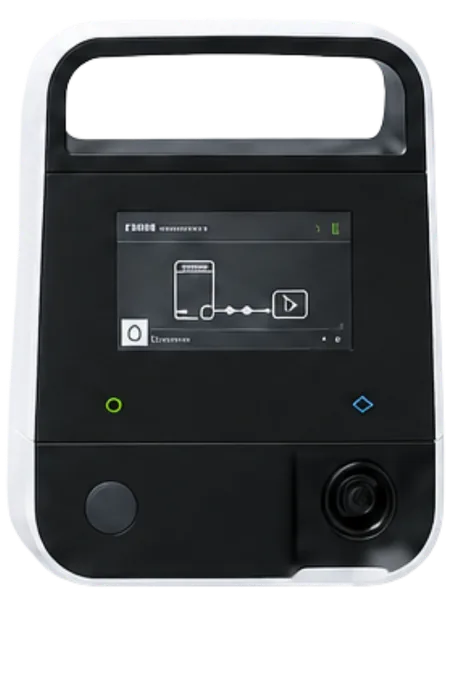
Azyro is designed to be used alongside the antiseptic already in use.
Integrating the device into hospital and community wound-care protocols
Wound-care teams adopting Azyro's diabetic foot ulcer device do not need to redesign existing protocols. The application chamber and Aurono Generator controller are built to sit alongside standard debridement, offloading, and dressing routines already in place, so a session adds a short step rather than replacing an established pathway. Onboarding for a wound-care team typically covers chamber placement, session timing, and documentation, with no specialised technician required once staff are trained. Because the same device and protocol travel with the patient from ward to home, discharge planning becomes simpler: the care team is not choosing between hospital-grade treatment and what a patient can manage outside it.
Safety profile
Azyro's diabetic foot ulcer device is a non-contact, non-invasive system: the magnetic field is applied through the existing dressing, with no needles, incisions, or heat delivered to the tissue. Preclinical work to date has focused on the device's antimicrobial mechanism rather than large-scale patient safety trials, and Azyro does not present the device as clinically validated for safety beyond its ISO 13485 quality-management certification. Facilities considering the device should treat it, at this stage, as a preclinical-stage bioelectronic platform rather than a cleared therapeutic, and should follow their own institutional protocols for evaluating new equipment.
The Azyro system is a development-stage device. It has not completed conformity assessment under Regulation (EU) 2017/745, does not carry a CE marking, and is not available for sale or for routine clinical use in any market. The ISO 13485 certificate issued by TÜV SÜD covers the quality management system of Azyro S.A., not the conformity or the performance of the device. All performance statements on this website are based on preclinical in vitro evidence.
Diabetic foot ulcer device FAQ
How do you treat an infected diabetic foot ulcer when antibiotics no longer work?
Azyro's magnetic-field technology disrupts the bacterial biofilm protecting the wound, restoring the effectiveness of antibiotics and antiseptics already in use. This is the core mechanism of Azyro's diabetic foot ulcer device, supported by preclinical SEM evidence of cell wall disruption in resistant strains like MRSA.
What is a diabetic foot ulcer device and how does it help?
A diabetic foot ulcer device like Azyro delivers a calibrated magnetic field through the dressing to reach bacteria deep in the wound. It potentiates antiseptics and antibiotics, even at sub-MIC concentrations, addressing infections that topical treatment alone cannot reach.
Does the device replace antibiotics?
No, the device does not replace antibiotics or antiseptics. It potentiates antiseptics even below the MIC (the device is at development stage).
Is the treatment painful, or does it require removing the dressing?
No, the Azyro application chamber works through the existing dressing without contact or pain. Sessions take under a minute to set up and require no dressing removal between treatments.
Can diabetic foot ulcers be treated at home?
Yes, Azyro's portable, plug-and-play design lets patients continue the same protocol at home that they received in hospital. This hospital-to-home continuity supports compliance for a condition that requires sustained treatment.
How does earlier infection control help prevent amputation?
Azyro's technology is designed to reduce bacterial burden and to decrease the risk of severe infections that lead to amputation.
Is the device safe to use near pacemakers or other implants?
The device emits a magnetic field. Until compatibility data is available, it is not to be used on patients with implanted electronic devices such as pacemakers, implantable defibrillators or neurostimulators.
What training do clinicians need before using the device?
The application step itself is designed to be simple: a single nurse or wound-care technician positions the chamber over the dressing and starts the protocol. Formal onboarding covers device handling, session documentation, and how the therapy fits alongside existing debridement and dressing routines, without requiring a dedicated specialist role.
Does the therapy interfere with other wound-care equipment nearby?
Azyro's magnetic field is calibrated to act locally on the treated tissue rather than to project broadly across a ward or treatment room. Facilities introducing any new magnetic-field-emitting device should still follow their usual equipment-compatibility checks, particularly around sensitive monitoring or imaging equipment placed in close proximity, as a matter of standard practice rather than a documented interaction specific to Azyro's platform.
Keep exploring